

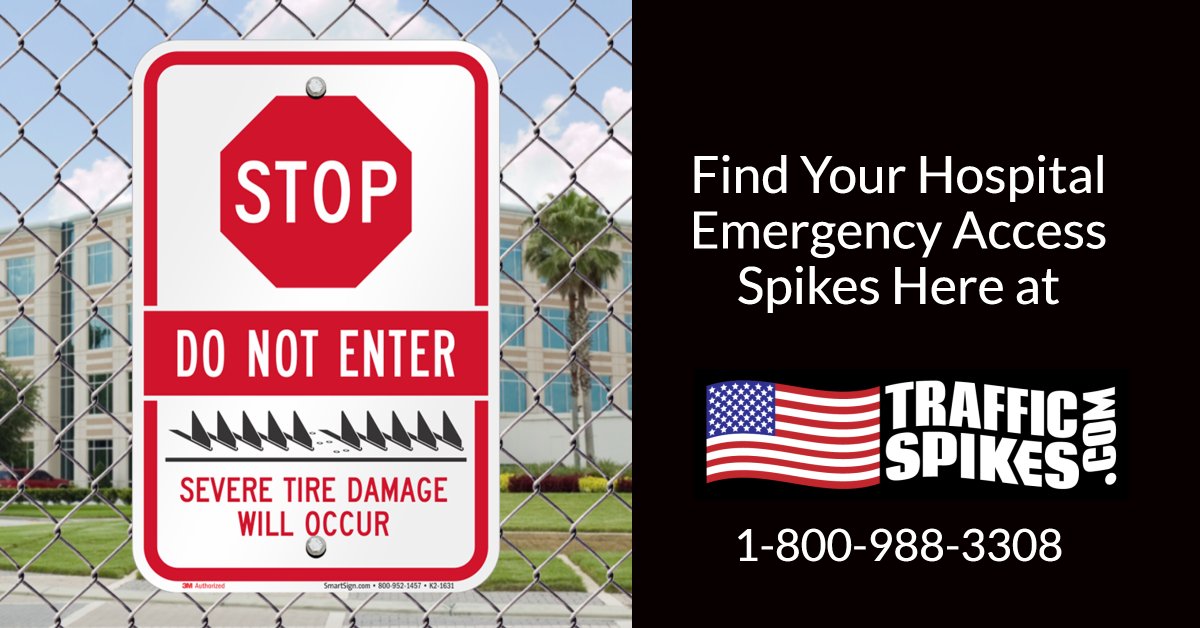
Picture a busy ER bay at 6 p.m. Lights flash, sirens fade, and seconds count. Cars drift toward the entrance, but that path must stay open for lifesaving work. That is where hospital emergency access spikes do their job, keeping the right vehicles moving and the wrong ones out.
These devices guide one-way traffic into secure areas without slowing ambulances. They protect patients, staff, and property while easing the load on guards. This guide breaks it down in plain language so facility managers, security leaders, and EMS coordinators can choose with confidence at TrafficSpikes.com.
Here is what you will get: how spikes work, types and where they fit, how to pick for traffic, climate, and code needs, and install, maintenance, and cost tips. If you need help fast, TrafficSpikes.com supports healthcare sites with smart options and friendly guidance.
What are hospital emergency access spikes and why hospitals use them
One-way tire spikes are metal teeth set in a housing across a lane. They let cars roll in the approved direction at a low speed, then rise to stop wrong-way entry. Used correctly, they clear access for ambulances, protect people, and keep side gates secure.
- Safety: One-way control helps prevent wrong-way entry and tailgating.
- Flow: Ambulances enter smoothly at posted speeds without stopping.
- Security: Unauthorized vehicles are deterred without a 24/7 guard.
- Peace of mind: Access stays predictable during busy shifts and major events.
When used as designed, spikes do not damage authorized vehicles. The teeth retract under the tires moving in the correct direction. Always check local rules with your fire marshal or authority having jurisdiction before installing any system, and post clear speeds.
One-way control keeps ambulances moving and blocks threats
Directional control is simple. The ambulance approaches at the posted speed, tires press the teeth down, and the vehicle passes without a stop. If a car tries to sneak in the wrong way, the teeth stay up and create a strong deterrent. This keeps ER lanes open, reduces delays, and supports EMS crews under pressure.
How tire spikes work without harming authorized vehicles
Most systems use spring-loaded or powered teeth mounted on hinge plates inside a rugged housing. As a tire rolls over from the approved side, the teeth fold down and then reset. Avoid sharp turns on the device. Keep a straight approach and use the correct speed. Wrong-way movement or speeding can damage tires, which is the intended security effect.
Best places to install spikes at a hospital campus
Hospitals often get the best results by placing spikes in high-impact spots:
- ER driveways and ambulance-only lanes
- Service roads to loading docks, pharmacy, or lab
- Staff entrances that need one-way flow
- Campus edge roads near gate arms to guide visitors to main entry points
Pair spikes with gates or barrier arms at campus edges to direct visitors where they belong while protecting critical routes.
Types of emergency access spikes available at TrafficSpikes.com
Hospitals need durable, quiet, and reliable devices that work day and night. Different designs fit different lanes, budgets, and security goals. Here is how to think about the main choices, without getting lost in model numbers.
- Mounting style and site prep
- Operation method and power needs
- Materials and finishes for long life
- Safety and visibility add-ons
For retrofit projects or after-hours access control, see these commercial traffic spikes for emergency vehicle access. They are built for access control and help maintain a steady flow around sensitive areas.
Surface-mount vs in-ground designs
Surface-mount units bolt to existing concrete or asphalt. They install quickly and work well for retrofits or short timelines. In-ground units sit flush, look clean, and handle higher volumes, but need trenching and drainage planning.
| Mounting Style | Pros | Considerations | Best Fit |
|---|---|---|---|
| Surface-mount | Fast install, simple retrofit, minimal downtime | Slight profile above grade, may need approach ramps | Temporary lanes, quick upgrades, budget-sensitive projects |
| In-ground | Flush finish, smoother ride, high volume ready | Trenching, drainage, longer install time | Permanent ER lanes, main service roads, new builds |
Manual, assisted, or automatic operation
Some spikes work passively, always armed against wrong-way entry. Others can be lowered or locked using access controls. Options include a key switch, remote, guard station button, or tie-in with gate controllers. Hospitals that want rapid control often choose automation. Explore motorized traffic spikes for rapid hospital access if you need fast, coordinated movement. When power matters, look for fail-safe settings and clear manual release steps in case of outages.
Build quality for 24/7 hospital use
Busy sites need heavy-duty housings, hardened teeth, sealed bearings, and drainage channels. Protective coatings like galvanizing or powder coat help resist rust and road salt. Duty cycle and load rating should match ambulances, fire trucks, delivery trucks, and shuttles. In coastal or snowy regions, choose higher corrosion resistance and plan for de-icer exposure.
Safety and visibility accessories that prevent mistakes
Make the path obvious so drivers never guess. Use bold signs, pavement arrows, LED reflectors, and pre-spike speed signs. Add speed bumps before the device to control approach speed. You can find essential accessories for traffic spike systems to boost safety and reduce the odds of user error.
How to choose the right spikes for your hospital
Here is a simple way to pick the right system for your site. Keep people safe, keep the ER moving, and match your code and climate.
Match design to traffic volume and vehicle mix
Estimate peak-hour counts. List vehicles that use the lane, such as ambulances, fire trucks, shuttles, box trucks, and visitor cars. Wider openings benefit from modular sections that scale up. Heavy vehicles or 24/7 use call for higher-duty builds. If in doubt, size up duty rating to reduce wear and noise.
Plan for climate, drainage, and snow
Water needs a place to go. For in-ground units, plan drainage and consider heaters if available in freezing zones. In snow country, train plow crews to avoid direct blade contact. Use de-icer carefully and clear the pit or housing after storms. In hot, dusty climates, schedule quick cleanings so grit does not bind the moving parts.
Connect with gates and emergency overrides
Spikes pair well with swing or slide gates and barrier arms. This guides visitors to main entries while keeping emergency lanes clear. Many hospitals integrate with access control for guard stations and control rooms. Review emergency vehicle priority, manual release methods, and code requirements. Coordinate with your fire marshal early. For integration ideas, review traffic spike controls for hospital parking safety.
Reduce noise near patient areas
Pick flush or damped designs if quiet operation is a priority. Post lower speeds and add rubber approach mats to soften tire contact. Keep bearings and hinges clean and lubricated. If you can, move the device farther from patient windows to reduce sound and vibration.
Installation, maintenance, and total cost of ownership
Good planning and steady upkeep pay off. You get fewer incidents, safe access, and less stress on your guard team. Here is how to think about the full lifecycle.
Pre-install checks and layout planning
Survey the site. Locate utilities, check slope and drainage, and inspect concrete or asphalt condition. Confirm lane width and turning radius for emergency vehicles. Plan clear approach lines and warning signs before the device. Set posted speeds that match the product guidance. Confirm permits and coordinate with facilities, security, and public safety teams.
Routine care that extends service life
Keep it simple and consistent:
- Weekly: Sweep away rocks, trash, ice chunks, and leaves.
- Monthly: Check fasteners for tightness and look for worn parts.
- Per maker guidance: Lubricate bearings and hinges as required.
- Seasonal: Inspect drainage, coatings, and paint visibility.
Keep a maintenance log. It helps track wear and supports warranty coverage.
Train security and EMS teams
Host short trainings for guards, valet staff, and EMS drivers. Cover posted speeds, correct direction of travel, emergency overrides, and what to do if a vehicle stops on the device. Share a one-page quick reference at the guard post or dispatch office.
Budget, warranties, and ROI
Several factors affect price: lane width, mounting style, operation method, materials and coatings, control hardware, power runs, and any concrete or trench work. Ask about warranty length and parts support. The return shows up as fewer security events, lower guard staffing at side gates, and smoother ambulance flow that keeps care on track.
Quick FAQ: speeds, noise, and emergencies
- What speed should vehicles use? Keep speeds low, as posted, for safe and quiet operation.
- Will spikes damage tires going the right way? No. At the proper speed in the approved direction, the teeth retract.
- What if power fails on a powered system? Choose a fail-safe setting when available and have a manual release plan.
- Are spikes loud? Good layout, posted speeds, and routine maintenance keep noise down near patient areas.
Conclusion
Hospital emergency access spikes protect people, keep ER lanes moving, and strengthen campus security. Review each entrance, match a design to your traffic and climate, and plan install with your safety team. Explore your options at TrafficSpikes.com, bring site photos, lane widths, and traffic details, and the team can guide you to a smart fit. Thank you for reading, and reach out if you want expert support tailored to your hospital.
Call Today!! 800-988-3309