

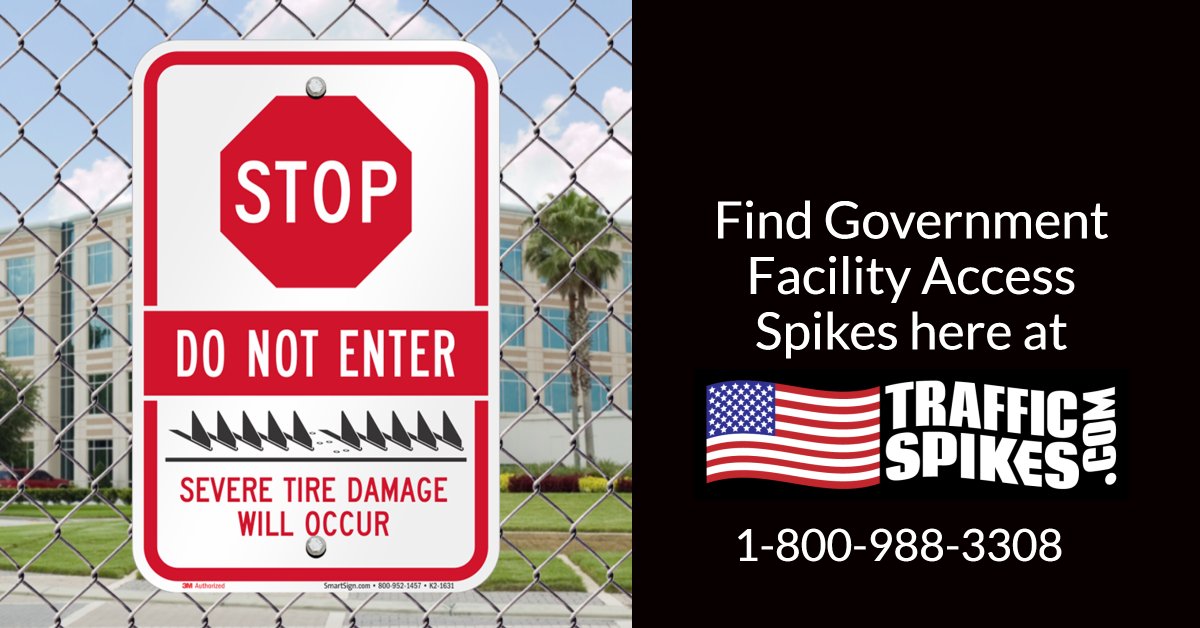
Need to control who comes in and out of a secure site? This guide shows how government facility access spikes help teams manage vehicles with clear rules, simple tools, and fewer surprises at the gate.
Access spikes are rows of steel teeth that control vehicle direction and speed. Agencies use them to stop wrong-way exits and block forced entries when drivers ignore signs or guards. They are not the same as anti-ram barriers, which protect against high-speed impacts. Spikes focus on controlled entry, better traffic flow, and lower risk of gate breaches.
You will learn how spikes work, where to use them, how to pick the right model, and how to handle install and care. You will also see how to order with government purchasing needs in mind. Ready to compare options? Explore models at TrafficSpikes.com.
What Are Government Facility Access Spikes and Why Do They Matter?
Access spikes control vehicle direction and speed in lane-based traffic. The design is simple. Teeth allow safe travel in one direction at low speeds. If a driver goes the wrong way, the teeth puncture tires.
Federal, state, local, and military sites use spikes to protect outbound lanes, motor pools, armories, and more. They help guards guide traffic, reduce tailgating, and prevent wrong-way exits. In short, they support consistent rules at the gate.
When part of a layered plan, spikes add a reliable checkpoint. They channel vehicles, reduce confusion, and give guards time to verify credentials.
How Access Spikes Work to Stop Unauthorized Vehicles
Most units use hinged or spring-loaded teeth. At the correct approach and posted speed, tires pass smoothly in the allowed direction. If a driver attempts the wrong direction, the teeth rise and puncture the tires.
Retractable units can be manual, electric, or hydraulic. These models let staff raise or lower the teeth on command, which helps during emergencies or VIP exits. See how policy-based setups come together with securing gates with spike access controls.
This is different from speed bumps and bollards. Speed bumps slow everyone, in both directions. Bollards block lanes but do not control direction. Spikes are about one-way control and reliable exit denial.
Where Agencies Use Them for Best Results
Common placements include:
- Outbound lanes at guarded gates
- Sally ports and secure courtyards
- Motor pools and maintenance yards
- Armories and police impounds
- Data centers and airport service roads
Spikes pair well with swing or slide gates. They reduce tailgating by setting a clear lane path, then backing that path with teeth. For example, a sally port can use a gate, a guard check, and spikes at the outbound lane. This cuts down on wrong-way exits and risky U-turns under pressure.
Airports and busy facilities often choose motorized options. See use cases for high-traffic areas with automated barriers at airports and facilities.
Safety Features That Protect Drivers and Guards
Effective setups include:
- Clear signs at the approach
- Speed limit markers and pavement arrows
- Bright paint or reflectors on housings and teeth
- Locking mechanisms to hold teeth down when needed
- Gate interlocks so teeth rise only when the gate is closed
Post a low speed, often 5 mph, to keep crossings smooth. Train guards and maintenance teams on daily checks and safe procedures.
Codes, Policies, and Risk Basics to Know
Check local codes, agency policies, and internal risk rules before selection. Spikes are not crash-rated anti-ram barriers. Treat them as part of a layered plan, with gates and access control devices.
Confirm ADA compliance for pedestrian routes. Use MUTCD-style signs so drivers understand the message. Align all markings with your agency’s sign standards.
How to Choose the Right Government Facility Access Spikes
Use this section to match needs to models. The right choice fits your traffic volume, vehicle mix, climate, and control plan. Include your security goals and budget. Keep the site team involved, and confirm any union or contractor requirements. Mention the phrase once here for clarity: government facility access spikes must align with your lane layout, speed policy, and gate controls.
End goal, consistent control without surprises for drivers or guards.
Match Spike Type to Traffic and Threat Level
- Surface-mount systems: Good for existing concrete or asphalt. Faster to install, easier to relocate. Consider surface mount spikes for government sites when trenching is not ideal.
- In-ground trough systems: Cleaner look, better protection of moving parts, stronger for heavy traffic.
- Manual locking plates: Budget-friendly, good for low volume or guard-only sites.
- Electric motorized units: Good for higher volume, predictable duty cycles, and simple control wiring.
- Hydraulic retractable units: Suited for very high duty cycles and larger, heavier vehicles.
- One-way vs bi-directional: Most lanes use one-way control. Bi-directional models serve sally ports or reversible lanes.
If your gate sees constant flow, confirm duty cycle. Coordinate guard procedures during peaks to avoid raises and lowers at the wrong times.
Size, Speed Rating, and Vehicle Class
Measure lane width from curb to curb. Choose module lengths that cover the whole lane, with no gaps. Plan the approach so drivers cross at 3 to 5 mph. Post the speed and back it up with paint, arrows, and lighting.
Match the rating to your vehicles. Light duty for cars and SUVs, heavy duty for trucks and buses. Consider axle loads, wheel spacing, and turning angles. Add lane narrowing, speed humps, or rumble strips ahead of spikes if drivers tend to rush.
Climate, Drainage, and Snow Readiness
Cold weather and storms demand planning. In-ground troughs need proper drainage and debris control. Keep leaves, gravel, and trash out of the teeth and hinges. In icy areas, consider heated troughs or a de-icing plan.
For plowing, keep teeth fully lowered before the blade passes. Mark the lane edges so crews see the equipment at night or in snow.
Budget, Warranty, and Total Cost of Ownership
Look beyond the sticker price. Count installation, concrete or asphalt work, power and control wiring, replacement teeth, paint, and routine care. Ask about:
- Warranty terms and what they cover
- Lead times and typical ship windows
- Parts availability and local service options
Build a maintenance budget from day one. A little care saves big money later.
Checklist before requesting a quote:
- Lane width and module length
- Traffic volume and peak hours
- Vehicle classes and axle loads
- One-way or bi-directional control
- Power availability and control method
- Climate and drainage notes
- Gate and access control integration plan
- Safety signs, paint, and lighting plan
Installation, Safety, and Maintenance Best Practices
Turn planning into steps. Keep work clean and predictable. Train staff and document the setup. The aim is safe daily use for years.
Site Prep and Install Steps That Prevent Delays
- Do a site survey with photos and a simple sketch.
- Call utility locates before trenching or drilling.
- Pick surface-mount or in-ground, then confirm anchors or concrete plan.
- Design drainage for trough systems.
- Plan power and control wiring runs.
- Stage equipment, then dry fit each module.
- Torque anchors to spec and align teeth.
- Test function with gate interlocks before opening the lane.
Use a licensed contractor with gate and traffic control experience. Stage lane closures to keep the facility running.
Connect Spikes to Gates and Access Control
Common integrations include gate operators, keypads, card readers, intercoms, and guard buttons. Use simple interlocks. Spikes should rise only when the gate is closed, then drop before the gate opens.
Add emergency release options, like a guarded switch or manual unlock. For continuity, consider UPS or generator power.
For smaller gate openings, pair with spike strips for gate protection, which can support entry denial where full modules are not needed.
Signage, Lighting, and Staff Training
Create an approach plan so drivers have time to react.
- Place warning signs upstream.
- Use reflective paint, arrows, and lane markers.
- Light the area for night shifts and storm days.
Train guards and maintenance teams on:
- Daily checks and opening procedures
- Speed enforcement at the crossing
- Emergency release steps
- Seasonal care and reporting issues
Routine Inspection and Seasonal Care
Monthly:
- Clear debris and check drainage.
- Inspect springs, hinge pins, and teeth.
- Tighten anchors and hardware.
- Touch up paint and reflectors.
Quarterly:
- Lubricate per manufacturer guidance.
- Test interlocks and safety circuits.
- Review guard procedures and logs.
Winter:
- Use approved de-icers that will not corrode parts.
- Keep teeth down before plowing.
- Inspect after storms for damage or ice buildup.
Installation, Safety, and Maintenance Best Practices
Turn planning into steps. Keep work clean and predictable. Train staff and document the setup. The aim is safe daily use for years.
Site Prep and Install Steps That Prevent Delays
- Do a site survey with photos and a simple sketch.
- Call utility locates before trenching or drilling.
- Pick surface-mount or in-ground, then confirm anchors or concrete plan.
- Design drainage for trough systems.
- Plan power and control wiring runs.
- Stage equipment, then dry fit each module.
- Torque anchors to spec and align teeth.
- Test function with gate interlocks before opening the lane.
Use a licensed contractor with gate and traffic control experience. Stage lane closures to keep the facility running.
Connect Spikes to Gates and Access Control
Common integrations include gate operators, keypads, card readers, intercoms, and guard buttons. Use simple interlocks. Spikes should rise only when the gate is closed, then drop before the gate opens.
Add emergency release options, like a guarded switch or manual unlock. For continuity, consider UPS or generator power.
For smaller gate openings, pair with spike strips for gate protection, which can support entry denial where full modules are not needed.
Signage, Lighting, and Staff Training
Create an approach plan so drivers have time to react.
- Place warning signs upstream.
- Use reflective paint, arrows, and lane markers.
- Light the area for night shifts and storm days.
Train guards and maintenance teams on:
- Daily checks and opening procedures
- Speed enforcement at the crossing
- Emergency release steps
- Seasonal care and reporting issues
Routine Inspection and Seasonal Care
Monthly:
- Clear debris and check drainage.
- Inspect springs, hinge pins, and teeth.
- Tighten anchors and hardware.
- Touch up paint and reflectors.
Quarterly:
- Lubricate per manufacturer guidance.
- Test interlocks and safety circuits.
- Review guard procedures and logs.
Winter:
- Use approved de-icers that will not corrode parts.
- Keep teeth down before plowing.
- Inspect after storms for damage or ice buildup.
Conclusion
Access spikes guide vehicles, stop wrong-way moves, and support guard control. You saw how they work, how to choose, and how to install and care for them. The best results come from a layered plan, clear signs, and steady training.
Gather your measurements, note your traffic, and plan power and drainage. Then reach out through TrafficSpikes.com for options and a fast quote. Take the next step toward safer lanes with government facility access spikes that fit your site.
Call Today!! 800-988-3309