

A wrong-way driver can turn a controlled exit into an open entrance in seconds. Restricted driveways, paid parking exits, and staff-only lanes need a physical way to reinforce the rules drivers see on signs.
Traffic Spike Types and Uses cover fixed, retractable, and portable equipment that directs vehicles while protecting private property. The right choice depends on whether you need daily access control or a temporary security response. First, it helps to understand how each system works.
Traffic Spike Types and Uses: How These Systems Control Vehicle Access
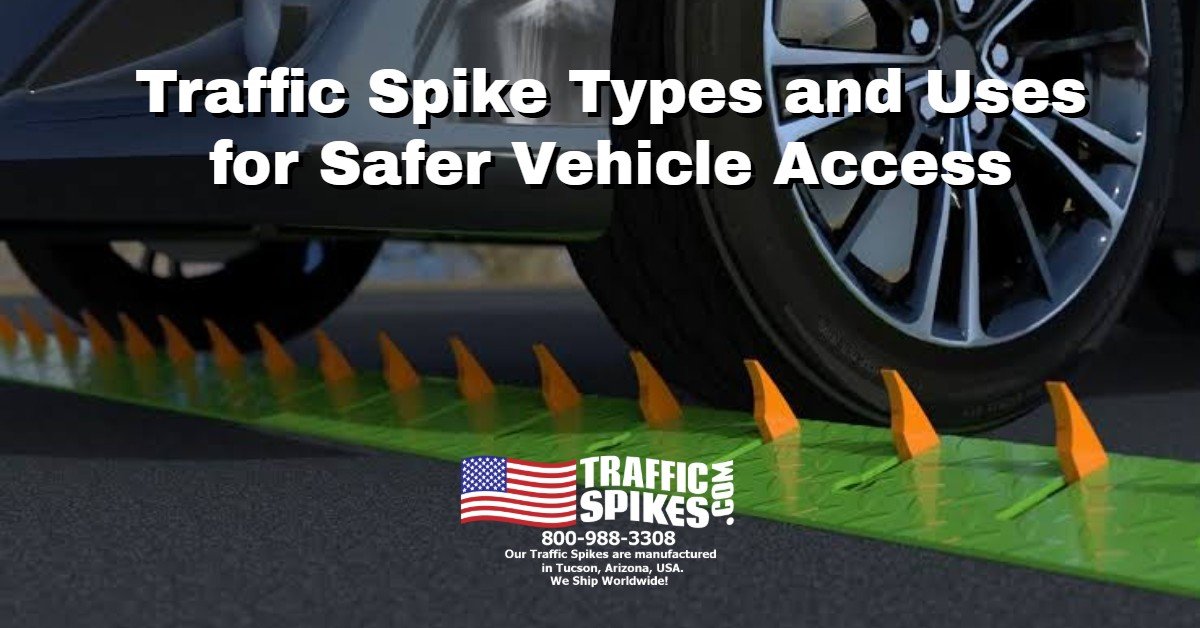
Traffic spikes use upward-facing metal teeth to deflate tires when a vehicle travels against the approved direction. In the permitted direction, folding or spring-loaded treadles lay flat so vehicles can pass safely.
The terms tire shredder, tire killer, tire popper, one-way treadle, and spike strip often describe related products. However, a permanently installed exit barrier differs greatly from a portable law enforcement strip. The basic spike strip design can be portable or secured to pavement, depending on its intended use.
When reviewing Traffic Spike Types and Uses, consider traffic direction, vehicle speed, pavement condition, lane width, weather, daily volume, and emergency access. A device that works at a low-speed parking exit may not fit a high-security entry lane.
Surface-Mounted Spikes for Fast Installation
Surface-mounted units bolt onto existing asphalt or concrete. Because crews do not need to cut a trench into the roadway, these systems can reduce installation labor and site disruption.
They work well at parking garage exits, gated communities, rental car lots, private driveways, and one-way employee exits. GR8 Holdings LLC (Traffic Spikes.com) offers the TireShark(TM) 2500 for sites that need a visible, fixed deterrent.
Warning signs, reflective markings, and proper placement matter as much as the hardware. Drivers need enough distance to read the sign, slow down, and choose the correct lane.
Flush-Mount Spikes for a Low-Profile Roadway
Flush-mount or in-ground systems sit at pavement level after a small roadway cut. Property owners often choose them when clearance, snow removal, and a cleaner driving surface are priorities.
These units suit permanent access points at commercial properties, campuses, schools, and secured entrances. Review access control traffic spikes when pavement-level installation and one-way vehicle control are part of the plan.
Motorized and Portable Systems
Motorized spikes can raise to block unauthorized travel and lower when approved vehicles need two-way access. Electronic controls can connect with gates, guard stations, badges, or emergency procedures.
Portable, hose-style, and placeable spike strips fill a different role. Law enforcement and trained security teams use them for pursuits, sobriety checkpoints, border operations, SWAT incidents, and temporary road control.
Portable spike strips require trained deployment, clear authority, and agency procedures. They are not a substitute for a permanent parking or gate-control system.
Where Different Traffic Spike Systems Work Best
The practical value of Traffic Spike Types and Uses comes down to the access problem at each location. A one-way garage exit, visitor entrance, delivery lane, and emergency route may all require different equipment.
Every installation should support a broader traffic-control plan with signs, lighting, lane markings, speed control, gates, and barriers. Spikes work best when drivers can clearly see the approved path before they reach the device.
Parking, Housing, and Public-Facing Sites
Parking lots, garages, HOAs, and apartment communities often use fixed spikes to stop wrong-way entry through exit lanes. They can also help protect payment-controlled exits and discourage drivers from bypassing gates.
Schools, arenas, airports, and corporate sites face changing traffic patterns throughout the day. Motorized systems can allow staff, delivery vehicles, event traffic, and emergency responders through when authorized. Facility managers should account for larger vehicles, peak traffic, and emergency response plans before installation.
Military, industrial, and high-security facilities may need heavy-duty or military-grade equipment as one layer of vehicle protection. Controlled speeds, visible warnings, and professionally planned lanes remain necessary even at restricted sites. For product options built for one-way deterrence, see TireShark traffic spikes.
Choosing Traffic Spike Types and Uses for Your Property
Start with the vehicle path. Determine which direction drivers may travel, where they can stop safely, and how emergency vehicles will enter or exit. Then review the pavement, lane width, vehicle types, traffic volume, weather exposure, and local requirements.
Surface-mounted units fit many existing paved lanes. Flush-mount systems offer a lower profile. Motorized equipment gives operators control when access rules change. Portable strips belong with trained teams during temporary deployments.
GR8 Holdings LLC (Traffic Spikes.com) manufactures TireShark(TM) systems in Tucson and ships worldwide. A product consultation can match the barrier to the site instead of forcing the site to fit a generic product.
Compare Full Cost and Plan Safety First
The lowest purchase price may not produce the lowest project cost. Compare pavement work, electrical service for motorized units, installation labor, signage, reflective accessories, replacement parts, and expected service life.
Safety planning must happen before installation. Add advance warning signs, lighting, lane paint, speed bumps where appropriate, safe stopping distance, and pedestrian protection. Authorized drivers should understand the correct direction well before they reach the spikes.
Traffic Spike Types and Uses: Benefits and Responsible Limits
Properly selected traffic spikes can enforce one-way travel, reduce unauthorized vehicle access, and provide durable control at vulnerable lanes. Motorized systems also give sites flexibility when they need to change access rules.
Still, these devices can damage tires when drivers enter incorrectly. Confusing lane layouts, poor visibility, improper installation, or ignored maintenance can create avoidable problems. Check local laws, insurance requirements, accessibility concerns, and emergency-access rules before moving ahead.
Final Thoughts
The best Traffic Spike Types and Uses match the location and traffic pattern. Surface-mounted systems offer practical fixed control, flush-mount units keep the roadway low profile, motorized models manage changing access, and portable strips support trained temporary operations.
A clear safety plan turns a tire barrier into reliable access control. Contact GR8 Holdings LLC (Traffic Spikes.com) at 800-988-3308 for product guidance and a quote.